
The Audemars Piguet Royal Oak watch is not a three-dimensional trademark.
The Milan Court recently ruled on the protectability of the shape of the famous “Royal Oak” watch created in 1972 by the Swiss company Audermars Piguet, initially protected as a three-dimensional trademark.
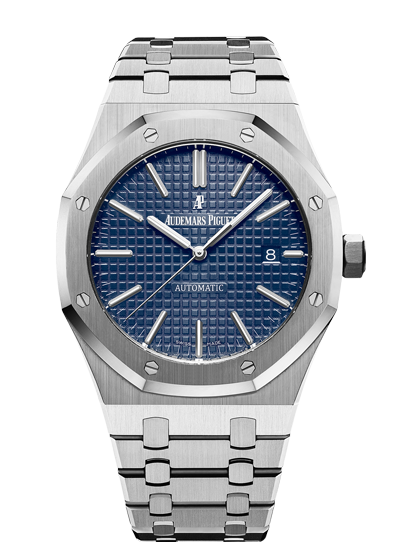
Audemars Piguet had registered the shape of the related bezel as an international figurative trademark and complained of trademark infringement and unfair competition due to slavish imitation by watches marketed by the Milanese start-up D One srl
Initially, the court issued an ex parte order prohibiting future marketing, but after D One appeared in court and presented its defense, the judge overturned his initial decision and rejected Audemars Piguet's appeal on the grounds that "there are numerous elements of doubt as to the validity of the trademark at issue", as evidenced by the fact that its registration as a Community trademark was denied by the competent office (OHIM).
In particular, according to the Court, the trademark appears to lack distinctive capacity, that is, the ability to "distinguish the products from those of another manufacturer and, therefore, perform the function of identifying the entrepreneurial origin of the product";
Again according to the Milanese court, the three-dimensional distinctive sign does not even appear to have acquired distinctive capacity through use (so-called “secondary meaning”), “no uniform use of the sign itself having been documented”.
Finally, registering the shape in question as a trademark does not even appear to be compatible with the provisions of Article 9 of the Italian Code of Civil Procedure, according to which "signs consisting exclusively of the shape that gives substantial value to the product cannot be registered as a trademark."
On the subject of unfair competition, the Judge recalled that, to constitute the offense of unfair competition pursuant to art. 2598, paragraph 1, no. 1 of the Civil Code, the slavish imitation of another's product must "involve characteristics that are completely inessential to the function they are intended to perform," that is, those "arbitrary and capricious" and "new compared to what is already known" characteristics that give the product originality and have distinctiveness, so that the public is led to associate them with the company from which the product originates. Only when it concerns these characteristics does the slavish imitation involve "elements capable of generating confusion among the public" and therefore constitute unfair competition that causes confusion.
In this case, the Judge did not find the existence of such an imitation, essentially stating – on the basis of what was found in the case of trademark infringement – that the imitated shapes were "structural to the product and not distinctive", as well as in some cases "now acquired by collective taste, having undergone a certain standardization", and that in any case there were "significant differences" between the two products.