
Who really owns AI-generated content?
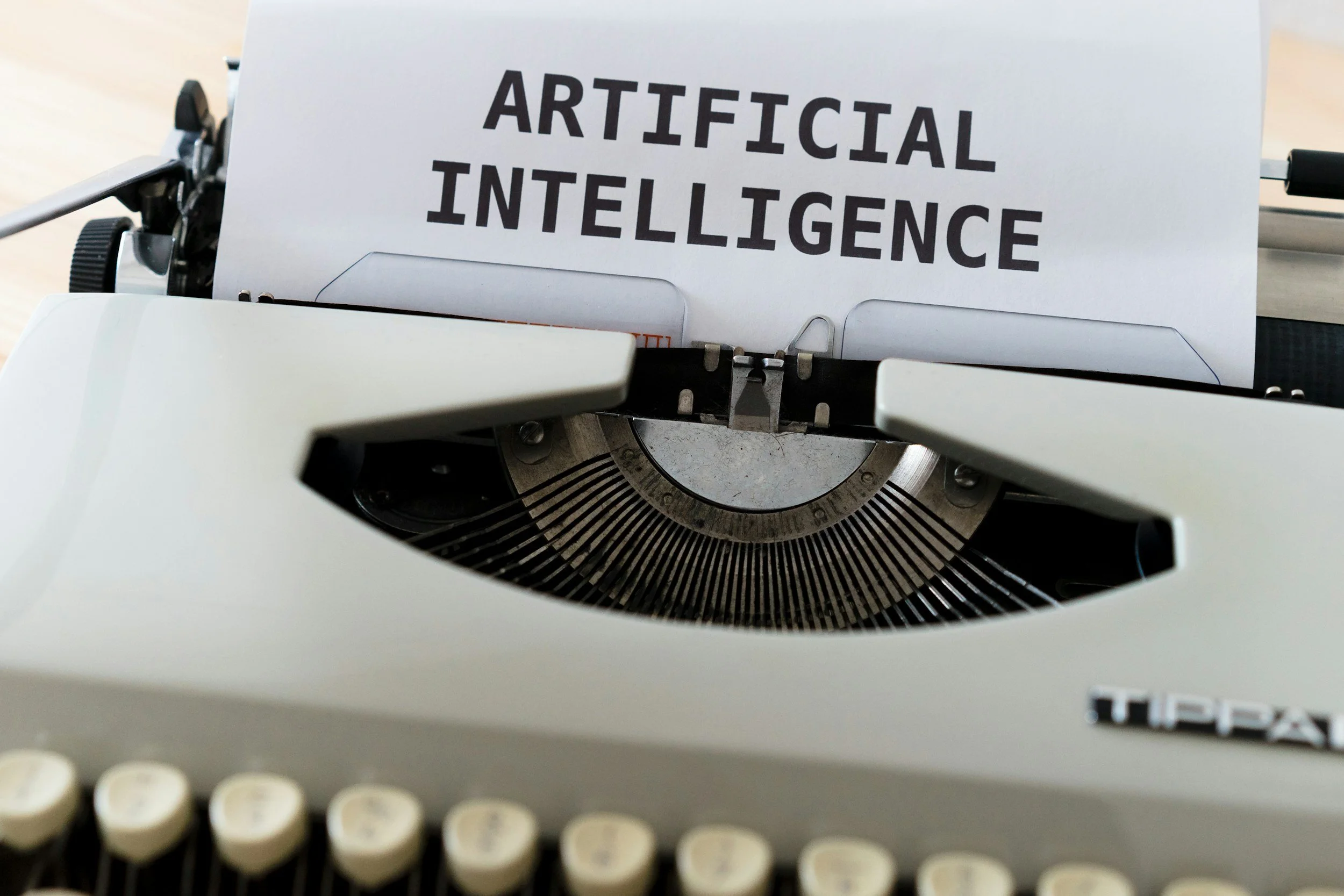
In recent months, artificial intelligence has made its way—almost without asking permission—into the daily operations of companies, agencies, and professionals. We use AI to write text, generate images for marketing campaigns, develop code, and build interfaces. Everything is faster, more cost-effective, and more scalable.
But there is one question that remains unanswered—and one that is rarely addressed with the attention it deserves: Who really owns that content?
The intuitive response—“They’re mine; I gave birth to them”—is also the most dangerous one.
Copyright, at least within the European system, continues to revolve around a very specific concept: protection stems from a human creative act. The result alone is not enough. What matters is the process—and, above all, who carries it out.
This means that when content is generated entirely by an artificial intelligence system, without any qualified human creative input, we may be dealing with something that is not legally protected. Not because it lacks value, but because—given the way the system is currently designed—the prerequisite for protection is missing.
And this is where the first glitch occurs.
Because many companies are investing time and resources in content that, in reality, could be freely reused by anyone. Without exclusivity. Without the ability to object. Without, in essence, any real control.
The issue becomes even more complicated if we take a closer look at what happens “inside” these processes. We often tend to view AI as a single, monolithic entity, but in reality, there are different layers. There’s the prompt—that is, the human input—which in some cases may have its own creative content. There’s the output—the generated result—which is what typically interests the company. And then there’s everything behind the scenes: the datasets, which remain outside the user’s direct control but can have a tangible impact in terms of risk.
And this is precisely where the issue ceases to be theoretical.
Because, in practice, we are seeing more and more companies use AI-generated content in relevant commercial contexts—campaigns, products, platforms—without asking themselves whether that content is truly “theirs” or whether it could expose them to legal challenges.
The problem in these cases is not so much the use of AI itself. It is the lack of a legal framework to govern that use.
It’s taken for granted that everything works the same way as in the traditional world: I create something, I become its owner, and I can exploit and protect it. But with AI, this sequence breaks down. And if it isn’t consciously reconstructed, there’s a risk of entering a gray area.
This is where the contract becomes crucial.
Not because it can “create” rights where the system does not recognize them, but because it can regulate what happens between the parties: who uses what, under what limitations, and with what responsibilities. It can clarify expectations that would otherwise remain implicit and, often, divergent.
In practice, this means explicitly addressing the issue of ownership of the outputs, avoiding standard formulations that imply full ownership. It means carefully managing representations and warranties, without promising what cannot be fully verified. And it means, above all, consciously distributing risk, because part of that risk—linked to the very functioning of the models—cannot be eliminated.
The most common mistake today is to think that AI is just a more efficient tool. In reality, it challenges the very way we relate creation, ownership, and responsibility.
That’s why the real issue isn’t whether or not to use artificial intelligence. That choice has already been made—often without us even realizing it.
The point is how to use it.
And, above all, how to build a framework around its use that is consistent not only from a technological standpoint, but also—and perhaps above all—from a legal standpoint.
Because in a world where anything can be created, what truly makes the difference isn’t what you produce.
It’s what you’re able to protect and control.